Flamenco Show BarcelonaAn Independent Guide Check Availability

Flamenco Show in Barcelona

Search flamenco show Barcelona and you get six very different evenings: a theatre stage off Plaça de Catalunya, an acoustic tablao on La Rambla, a dinner amphitheatre on Montjuïc, a cocktail bar and a monastery cellar. Here is what each costs, what time it starts and which one fits the night you have.

Updated August 2026

  • Times, prices and age limits read off the operators' own listings
  • Free cancellation up to 24 hours on every show listed
  • Rated 4.6 to 4.9 by verified bookers
Quick answer Prices, start times and which room suits which evening

A flamenco show in Barcelona runs 50 to 70 minutes, the ticket usually includes one drink, and seats on this page start at $23 with free cancellation up to 24 hours before curtain. The cheapest is Teatro Flamenco in El Born, the highest-rated is the cellar at El Paraigua, and the room flamenco people name first is Tablao Cordobés, family-run since 1970 and played without microphones. Dinner is the fork in the road: it can double what you pay, and it is only worth it in two of these venues.

Key takeaways

Flamenco Shows in Barcelona, Compared

Six venues currently selling tickets, from a theatre off Plaça de Catalunya to a cellar under the Gothic Quarter. "From" is the lowest adult ticket we read on each listing in August 2026; booking, payment and cancellation are handled by GetYourGuide, and the venue sets what the ticket includes. Read the drink and dinner lines before you compare prices, because a €48 tablao seat with a drink is not the same product as a €23 theatre seat without one.

Independent venue comparison
Listings last checked: August 2026
Times and prices taken from the venues' own pages
Traveller feedback reviewed: 25,000+ reviews

Which Flamenco Show Fits Your Evening

Two columns decide most bookings here: the drink and the start time. A cheap ticket without a drink and a dearer one with two included can land within a euro of each other by the time you leave, and an 21:00 curtain rules out an early dinner.

Venue From Length Drink Dinner Curtain Rating Book
Tablao Cordobés $41 70 to 135 min Included Buffet or tapas, prepaid Several sittings 4.7 (5,028) Check Availability Details
El Paraigua cellar $29 50 min Included None 21:00 sharp 4.9 (348) Check Availability Details
Tablao de Carmen $102 60 min Included In the price 18:45 or 21:15 4.8 (2,262) Check Availability Details
City Hall Theatre $29 60 min Paid option None Nightly 4.6 (12,130) Check Availability Details
El Duende bar $31 55 min Zones A and B None Nightly 4.7 (4,219) Check Availability Details
Teatro Flamenco $23 60 min Premium and VIP None 17:00, 19:00, 20:45 4.7 (1,048) Check Availability Details

Every show listed here is free to cancel up to 24 hours before curtain.

Tablao de Carmen looks expensive in this table because its listing is the dinner package rather than a seat: the food, the drink and entry to Poble Espanyol from 16:00 are all inside that figure.

Tonight and This Week

Live dates and prices for our pick, the acoustic tablao on La Rambla, straight from the booking platform. Prices on this page were read from the listings in August 2026 and the venues change them without notice.

Powered by GetYourGuide

Comparing one of the others? City Hall Theatre · Tablao de Carmen · Teatro Flamenco · El Duende · El Paraigua

The Six Rooms, One by One

Same art, six completely different evenings. What changes is the room: how far you sit from the dancer, whether there is a microphone between you, and what is on the table.

Tablao Cordobés, La Rambla 35

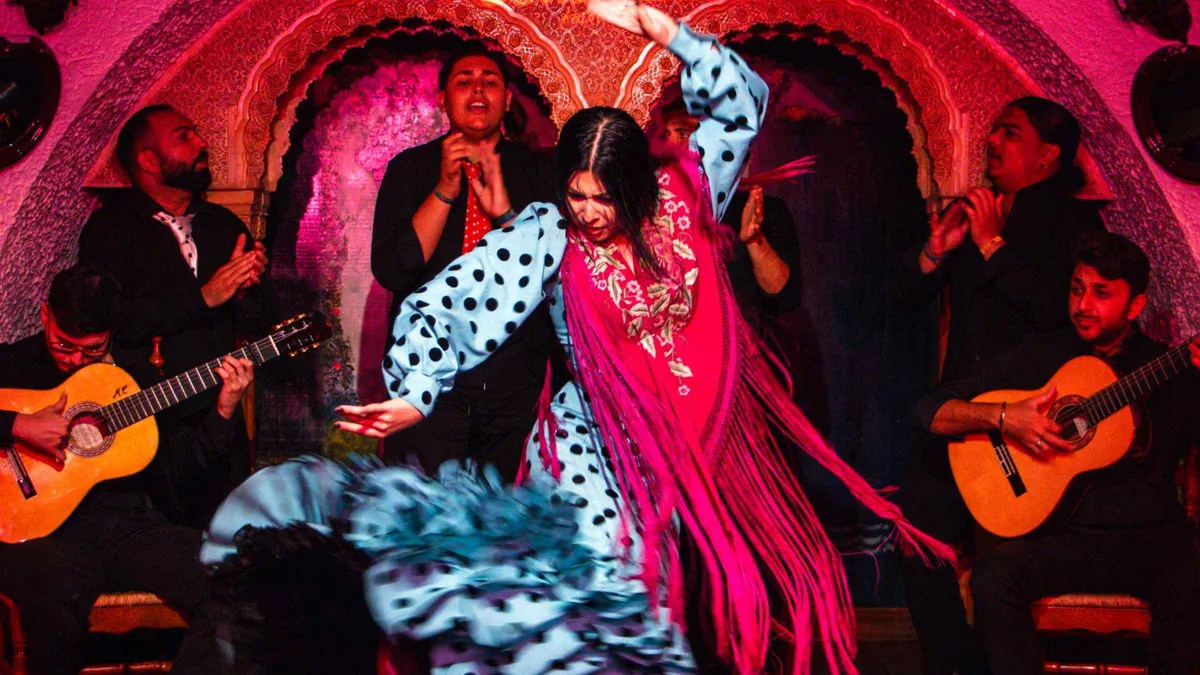
The reference point. Cordobés opened in 1970, is run by a family of artists, and was named Best Tablao in the World 2025 by the Flamenco School of Andalusia. Camarón de la Isla and Farruco played this stage; the current programme rotates award-winning names like Jesús Carmona, José Maya and Belén López.

Two things separate it from the theatre shows. The room caps at 120 people, and nothing is amplified, so what reaches you is the actual voice and the actual heel on wood. The decor is Nasrid work by the master restorers who work on the Alhambra, which sounds like marketing until you sit under it.

The show alone is €48 with a drink. Dinner is bought in advance, never at the door: €38 adds the Spanish tasting buffet, over 40 dishes with unlimited wine, beer, sangría, cava and coffee during dinner, and €21 adds the lighter tapas service from 16:30. Both dinner options carry preferential seating, which in a 120-seat room is the difference between four metres and eight.

El Paraigua, Plaça Sant Miquel

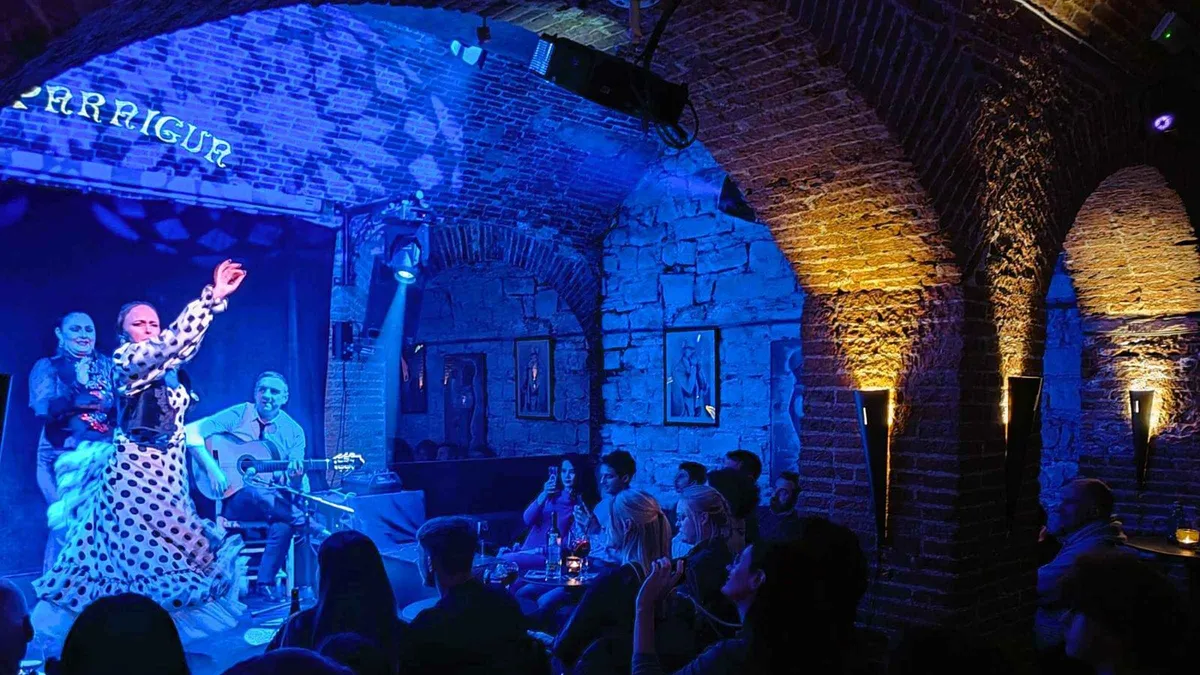
The highest-rated show on this page is also the smallest and the strictest about time. Your drink is poured from 20:30, the cellar opens at 20:45, the show runs 21:00 to 22:00, and then the bar upstairs is yours for as long as you want it.

The cellar is genuinely old: the vaulting is the surviving fabric of an 11th-century monastery, and the modernista bar above it spent the last century selling umbrellas and fans, which is where the name comes from. The programme covers alegrías, soleares and tarantos with cante and solo guitar, which is a fuller spread of palos than most 50-minute shows attempt.

It is a cellar, so mobility matters, and the room is small enough that weekend dates disappear a week ahead.

Tablao de Carmen, inside Poble Espanyol

Carmen is the dinner venue. It was built in 1988 as a tribute to Carmen Amaya, the Roma dancer born in Barcelona's Somorrostro shacks who ended up dancing for Hollywood, and it is laid out as an Andalusian amphitheatre so the tables face the boards rather than each other.

Two sittings a night: doors 18:00 for the 18:45 show, doors 20:30 for the 21:15. The ticket also opens Poble Espanyol from 16:00, and since that open-air village normally charges around €12 to walk into, arriving early is free money. Search map apps for "Porta d'Ávila", not for the tablao, or you will be sent to the wrong side of Montjuïc.

City Hall Theatre, Rambla de Catalunya 2

The volume choice: 12,130 reviews, more than every other venue on this page combined, at a price that undercuts the tablaos. It plays in the early-19th-century former Teatro de Barcelona, and the room shows it, with velvet curtains, bulb-framed stage and the original machinery still overhead.

What you trade is intimacy. This is a theatre audience watching a stage, amplified, rather than fifty people around a wooden platform. The programme leans on the sharp end of the repertoire, bulerías and soleás with face-to-face duels between dancers, and the artists named on the listing are working professionals of the Catalan scene.

One hard limitation: there are stairs to the auditorium and no lift, and the venue states it is not suitable for wheelchair users.

El Duende, next door to Cordobés

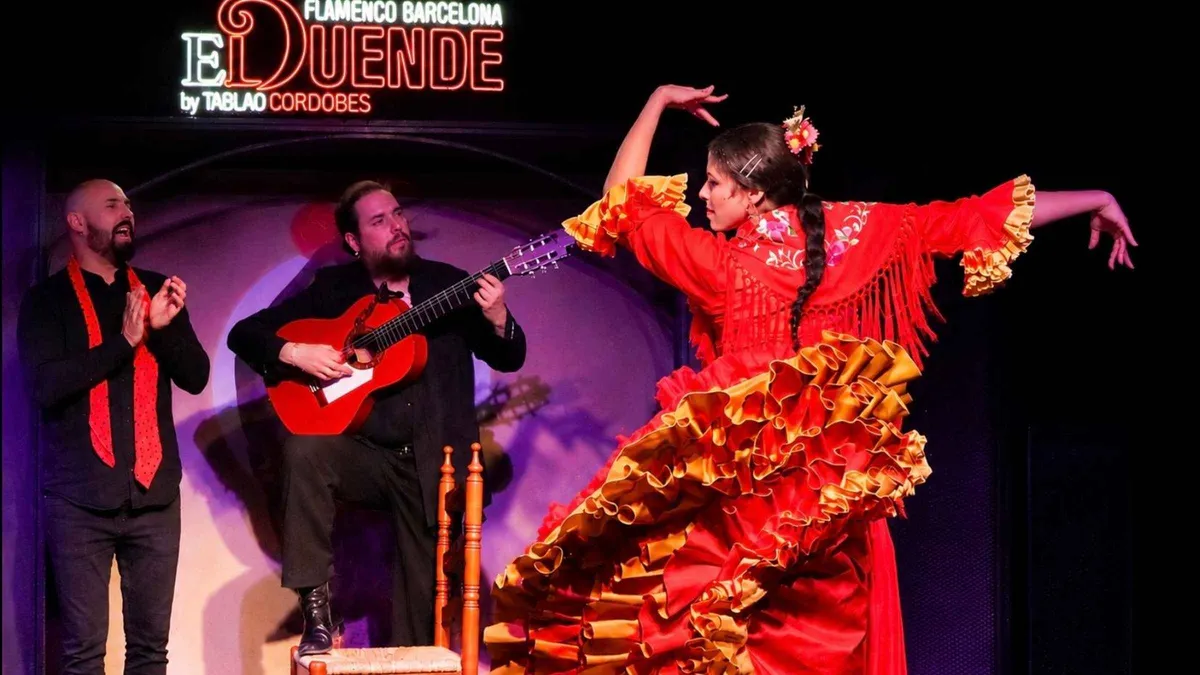
The same family, a smaller room and a cocktail list. El Duende was opened by Tablao Cordobés as a bar rather than a tablao, and it programmes established artists next to the ones coming up, with a different line-up every night. Fifty-five minutes, maximum 120 guests, and drinks keep coming from the bar throughout.

Seating is zoned: A and B include a drink, Zone C is the cheap seat and does not. It is not wheelchair accessible and under-4s are not admitted.

Teatro Flamenco Barcelona, El Born

The cheapest seat here, in a theatre that bills itself as the first ever purpose-built for flamenco. The show is called "Inspiración", it runs an hour, doors open 30 minutes before, and it plays every day of the year except 24 December.

The useful thing about this one is the clock. With slots at 17:00, 19:00 and 20:45 you can watch flamenco and still eat dinner in El Born at a Spanish hour. Tiers run General, Premium with a welcome drink, and VIP, which adds priority entry, drinks through the show and a meet-and-greet with the artists afterwards.

Tablao, Theatre or Cellar: What Actually Changes

The word tablao means the wooden platform the dancer works on, and the format grew out of the cafés cantantes of the 1800s. Everything else on this page borrows from it.

A tablao is a room built around the floor

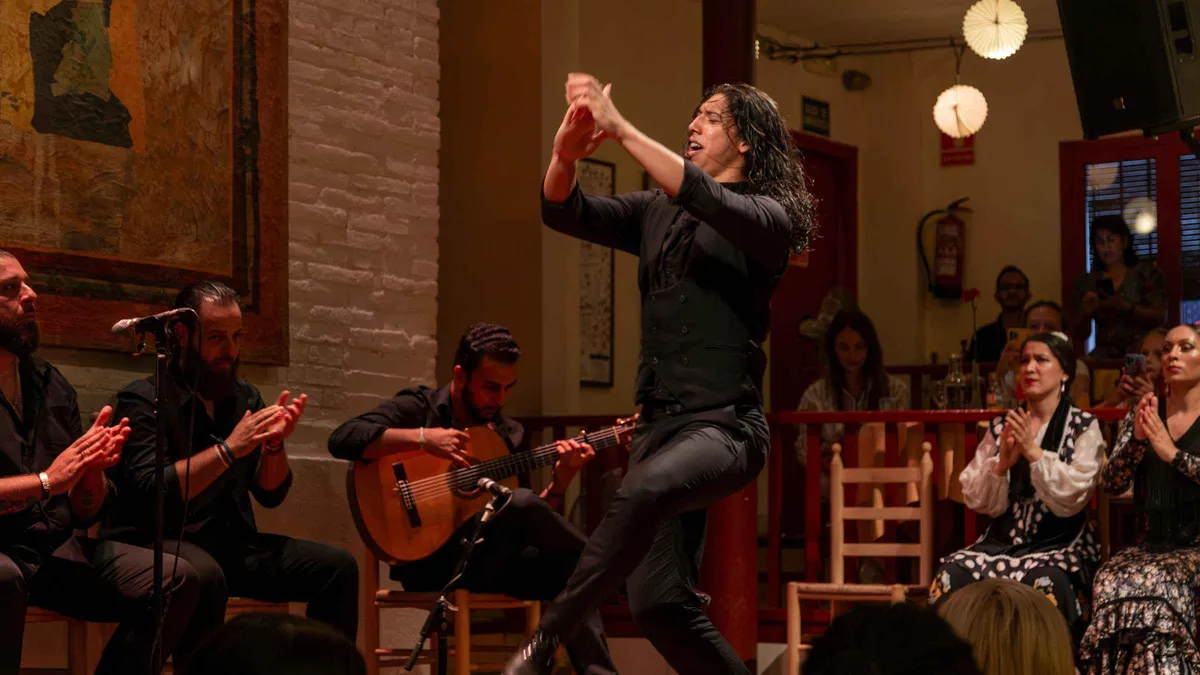
In a tablao the dancer is on a low wooden platform a few metres from your table, the guitarist and singer sit at the side, and the palmas, the hand-clapping that carries the compás, come from the artists not from a track. Nothing is scheduled to the second. Because the room is small, an unamplified show is possible, and once you have heard footwork without a microphone the amplified version sounds like a recording of itself.

Cordobés and Carmen are tablaos in this sense. El Paraigua is a cellar doing the same thing with stone instead of wood.

A theatre is a production

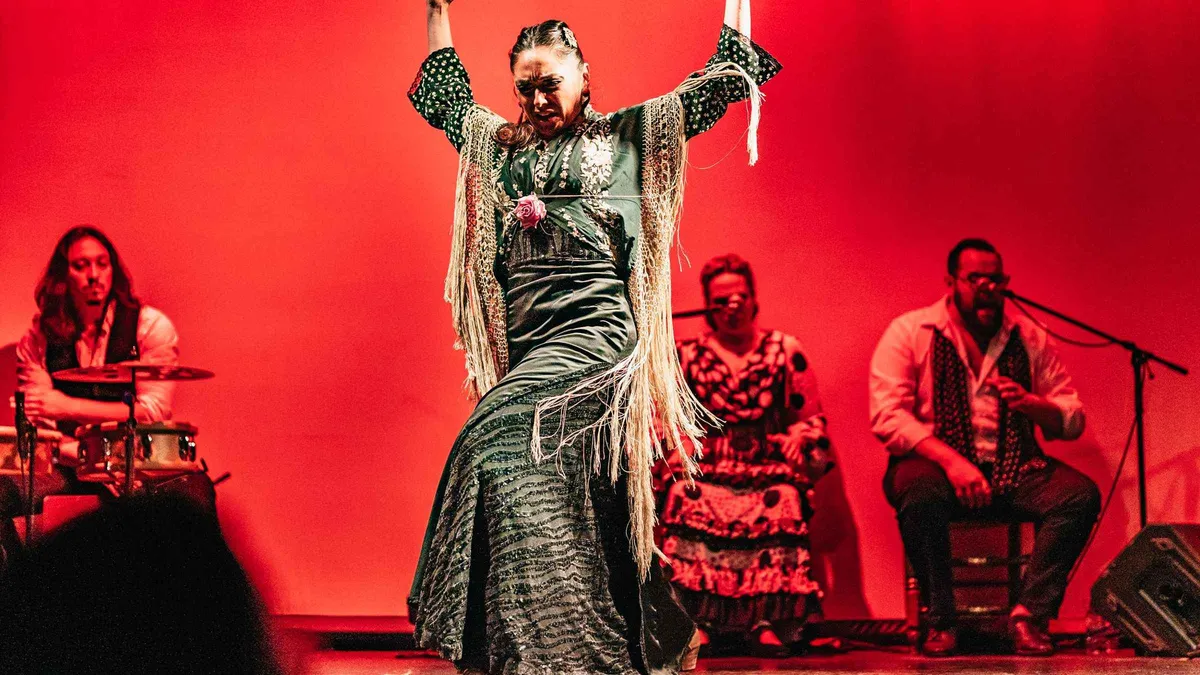
City Hall and Teatro Flamenco sell a staged show: lighting cues, a set order, a bigger cast, amplification, and a seat with a number on it. It is the safer purchase if you are unsure whether you like flamenco, because a production is designed to be legible to someone who has never heard a soleá. It is also the format that scales, which is why the cheapest tickets in Barcelona are theatre tickets.

A bar is a night, not an event

El Duende sits between the two: a proper 55-minute performance, then a bar you can stay in. If the show is the start of your evening rather than the whole of it, this is the one that behaves accordingly.

So which should you book?

If you care about the art, book the acoustic tablao and pay for the closer seat. If you are bringing people who might be bored, book the theatre, keep it to an hour, and go to dinner. If you want a night out, book the bar or the cellar and let the evening run on afterwards.

Dinner and Show: When the Food Is Worth Paying For

Almost every venue sells you something to eat. Only two of them are actually selling dinner.

What the dinner packages really are

At Tablao Cordobés dinner is served before the show, upstairs in a separate Alhambra-style dining room looking over La Rambla, by chef Jordi Narro, with vegan, vegetarian, halal, gluten-free, lactose-free and nut-free versions available. The buffet runs over 40 Spanish and Catalan dishes with unlimited wine, beer, sangría, cava, soft drinks and coffee for €38 on top of the €48 seat. The tapas service is €21 and lighter: Iberian cured meats, local cheeses, one drink.

At Tablao de Carmen the meal is at your table facing the stage, and the listing on this page bundles the dinner, the drink and Poble Espanyol entry into one price.

Palau Dalmases, which is not on this page but is the other name you will see everywhere, adds a tapas menu at €18 or a Spanish dinner at €35 to a seat that starts around €30.

The honest verdict

The buffet at Cordobés is worth it if you would otherwise be paying for dinner and drinks somewhere else that evening: unlimited drinks alone covers a good part of €38, and the preferential seating that comes with it is genuinely better. It is not worth it if you want a quiet meal, because you are eating on a schedule set by the curtain.

Carmen is the opposite case. There the meal is the evening, not a preamble, and the room is designed for eating while watching rather than eating and then watching.

At every other venue on this page, eat somewhere else. A €21 tapas add-on next to La Boqueria market is a poor trade when the whole Gothic Quarter is fifty metres away.

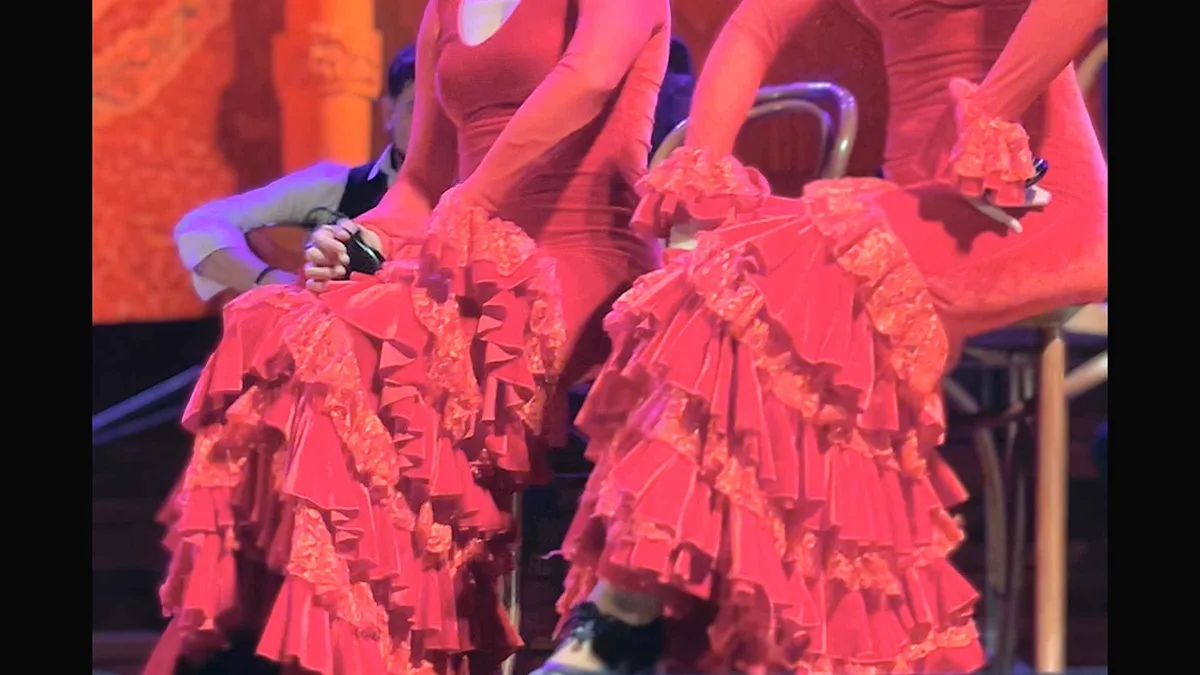
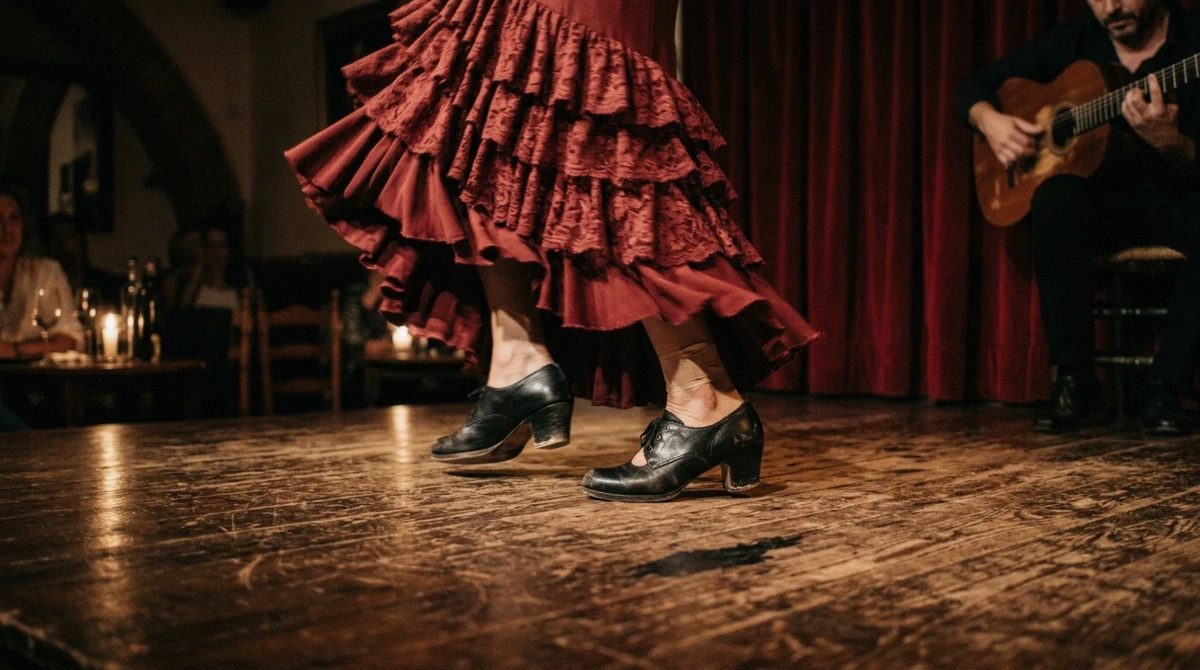
Dancer's feet and skirt on the wooden boards of a tablao during a flamenco show in Barcelona, Spain
In a tablao the boards are a few metres from the tables, which is why the venues that go without microphones can.

What You Are Actually Watching

Flamenco was inscribed on UNESCO's Representative List of the Intangible Cultural Heritage of Humanity in 2010, listed for Spain with Andalusia named as its heartland. It is Andalusian, not Catalan, and the reason Barcelona has world-class tablaos is migration: Andalusian and Roma families settled here through the twentieth century, and Carmen Amaya, one of the greatest dancers the art has produced, was born in a shack settlement on this city's beach.

Three parts and a fourth that holds them together

Cante is the singing, baile the dance, toque the guitar. Palmas, the hand-clapping, carries the compás, the rhythmic cycle everything sits inside. The cante is the oldest and least tourist-friendly element, sung in a raw, cracked voice that first-time listeners often assume is a mistake. It is not; it is the point.

In an unamplified room like Cordobés, you can hear all four separately. In a big amplified theatre you mostly hear the feet, which is a real loss even when the dancing is superb.

The palos you will hear

A palo is a style, each with its own compás and mood. A Barcelona programme usually opens with something bright and moves darker. Alegrías are the sunny Cádiz style; bulerías are fast, loose and where the artists show off; soleá is the slow, heavy one, and where the best dancers earn their money; tarantos come from the mining country and sound like it. El Paraigua names alegrías, soleares and tarantos explicitly; City Hall programmes bulerías and soleás with duels between dancers.

Duende, and why nobody can promise it

Duende is the word for the thing everyone hopes for: the moment a performance stops being technique. It is not scheduled, it does not happen every night, and no venue can sell it to you. What a venue can sell is the conditions for it, which is a small room, real artists, and an audience that is quiet.

That is the whole argument for the acoustic tablaos on this page over the bigger stages.

What a Ticket Really Costs

Barcelona flamenco prices look scattered until you notice that they are sold in zones, and that the drink moves between included and extra depending on the zone.

Zones, not seats

Most venues sell three tiers. At El Duende it is Zones A, B and C, where C is the cheapest and the only one without a drink. At Teatro Flamenco it is General, Premium with a welcome drink, and VIP with unlimited drinks and a meet-and-greet. Palau Dalmases prices by row: roughly €30 at the back, €40 for Zone A with a drink, €50 for the VIP zone.

The rule that holds across all of them: in a room of 120 people or fewer, upgrading one tier buys you a genuinely different experience, and in a theatre it mostly buys you a better angle.

Where the money goes

A €48 seat at an acoustic tablao is paying six to eight professional artists working a full programme in a room that cannot hold more than 120 people. A €23 theatre ticket is paying a larger cast in a room that holds several times that. Neither is a rip-off; they are different businesses.

What is worth avoiding is the cheapest tier at a venue whose whole appeal is proximity. Zone C at a small room is the one purchase on this page we would talk you out of.

Booking ahead or at the door

Every listing here carries free cancellation up to 24 hours before the show and Reserve Now and Pay Later, so booking early costs nothing and holds the date. That matters most at El Paraigua, where the cellar is small, and at Carmen, where there are only two sittings a night. Walking up on the night works more often at City Hall than anywhere else here, simply because the theatre is bigger.

Where the Venues Are

Five of the six are inside a fifteen-minute walk of each other in the old city; the sixth is up on Montjuïc inside Poble Espanyol, which is the one to plan travel time for.

Tablao or cellar
Theatre or bar

Free and Cheap Flamenco in Barcelona

"Flamenco show Barcelona free" is one of the most searched versions of this question, so here is the straight answer.

There is no free tablao

Every venue on this page pays a company of professional artists nightly, and none of them gives the show away. What you will find advertised as free flamenco is usually a busker on La Rambla or in Plaça Reial, or a restaurant with a guitarist between courses. Enjoy them, tip them, but they are not the art form these rooms are selling.

The cheap option that is actually good

The Jazz Sí Club, run by the Taller de Músics music school in El Raval, holds flamenco sessions at the end of the week for roughly €5 to €10 including a drink. The performers are conservatory students rather than the touring professionals a tablao books, the room is tiny and seating is first come, first served, so arrive early. It is the honest budget answer, and it is a completely different proposition from a €48 seat at Cordobés.

Cheap seats at real venues

If you would rather see professionals, the lowest professional prices in the centre are the General tier at Teatro Flamenco and the standard seat at City Hall, both around the price of two cocktails. Los Tarantos on Plaça Reial, running since 1963 and the oldest tablao still working in the city, sells short shows of about half an hour at a low price, with first-come seating that leaves latecomers standing.

Flamenco at the Palau de la Música and Other Names You Will See

Three venues come up constantly in searches but are not part of the comparison above. Here is what they are, so you can decide whether to look them up.

Palau de la Música Catalana

Domènech i Montaner's modernista concert hall in Sant Pere programmes flamenco as a concert: a large auditorium, tiered seating, a fixed programme, no table and no drink in front of you. Some packages pair it with a sailing trip along the coast. Go for the building, which is one of the most extraordinary interiors in Europe, and understand that you are buying a concert rather than a tablao night.

Palau Dalmases

A 17th-century palace in El Born with three shows a night and row-based pricing, roughly €30 at the back, €40 for Zone A with a drink, €50 for the VIP zone, plus an €18 tapas menu or a €35 Spanish dinner added at booking. It ranks at the top of Google for this search because it is a venue website, not because it is the only good room in town.

Los Tarantos

On Plaça Reial since 1963, the oldest tablao still operating in Barcelona. Shows are short, about 30 to 35 minutes, tickets are cheap, and seating is first come, first served. A decent way to find out whether flamenco is for you before committing to a full programme.

Practical: Dress, Timing, Children, Access

The questions that come up after the ticket is booked.

What to wear

No venue on this page has a dress code. Barcelona in the evening runs smart-casual and locals dress up a little for a tablao, so a shirt or a dress will never feel wrong, and jeans and clean trainers will not get you turned away either. The cellars and small rooms get warm once they fill; take a layer you can drop over a chair.

When to arrive

Thirty minutes before the show covers every venue here. Teatro Flamenco opens its doors exactly 30 minutes ahead; Carmen opens 45 minutes ahead so guests can eat; El Paraigua pours the included drink at 20:30 for a 21:00 curtain. At Carmen go earlier still, because your ticket lets you into Poble Espanyol from 16:00 and the village is worth an hour.

Children

Cordobés, El Duende and El Paraigua do not admit children under 4, and the two Cordobés rooms ask adults to step out with a child rather than let noise into an acoustic show. City Hall and Teatro Flamenco are the easier bookings with a family; reviewers regularly bring ten-year-olds to the theatre shows.

Accessibility

City Hall states plainly that there are stairs to the theatre room and no lift, and that it is not suitable for wheelchair users. El Duende is not wheelchair accessible either. Cordobés takes strollers and non-motorised wheelchairs, with a lift door of 70 cm and a car of 90 by 90 cm, but not electric wheelchairs. El Paraigua is a cellar and says nothing on the subject, so ask before you book.

Photography

Cordobés and El Duende forbid photos and video during the show and then announce a photo moment in the final five minutes, which is a sensible arrangement and worth knowing so you are not caught out reaching for a phone in the dark.

When to Book, Month by Month

Flamenco is indoors, so the weather never cancels it. What the calendar changes is how far ahead you need to book and how pleasant the walk home is. Bars show Barcelona's average daytime high in Celsius.

The small venues are the constraint, not the season. A 40-seat cellar sells out on an ordinary February Saturday, while a theatre with several hundred seats often has tickets an hour before curtain in August.

What Travellers Said After Going

★★★★★ ★★★★★
Excellent show. We went as a family of three with a ten year old daughter. The dancers were skilled and the whole show was very entertaining.
Jennifer · United Kingdom · August 2026
★★★★★ ★★★★★
The venue is cozy which is great for the acoustic. Almost every seat gets a good view compared to other shows. The singers and dancer are ++++.
Omar · United States · June 2026
★★★★★ ★★★★★
The show was very good, the dancers, the musicians and the singers created a great atmosphere. The food was good too.
Nigel · United Kingdom · June 2026
★★★★★ ★★★★★
Fantastic show. They are all so talented. The venue was great. All welcoming. Very authentic. Intimate venue.
Julie · United Kingdom · July 2026
★★★★★ ★★★★★
The bar is small so you get a great view from every seat. The show was amazing and really entertaining.
Francesco · Italy · May 2026
★★★★★ ★★★★★
A fantastic show in an atmospheric venue. Highly recommend.
Julie · United Kingdom · November 2025

One excerpt per venue, from verified GetYourGuide reviews with their original dates. Full reviews sit on the operator's listing.

Flamenco in Barcelona: Questions Travellers Ask

Which flamenco show is best in Barcelona?

For the art itself, Tablao Cordobés: family-run since 1970, named Best Tablao in the World 2025 by the Flamenco School of Andalusia, capped at 120 guests and performed without microphones. For a night out with the highest satisfaction scores, the cellar at El Paraigua rates 4.9 from 348 reviews. For dinner that is genuinely part of the evening, Tablao de Carmen. The full comparison sets them side by side.

Is it worth seeing a flamenco show in Barcelona?

Yes, with one caveat: pick the format deliberately. An unamplified tablao at four metres and a large amplified theatre are different products, and travellers who come away disappointed almost always booked the second while expecting the first. Read what changes between a tablao, a theatre and a cellar before you choose on price.

Where can I see flamenco dance in Barcelona?

The venues cluster in the old city: Tablao Cordobés and El Duende on La Rambla, El Paraigua on Plaça Sant Miquel in the Gothic Quarter, Teatro Flamenco in El Born, City Hall at the top of Rambla de Catalunya. The exception is Tablao de Carmen, up on Montjuïc inside Poble Espanyol. The map shows all six.

What should I wear to a flamenco show in Barcelona?

There is no dress code at any venue on this page. Smart-casual is the local default and a shirt or dress fits the tablaos comfortably; jeans are fine everywhere. Small rooms and cellars warm up once they fill, so bring a layer you can take off. More practical notes.

How much does a flamenco show in Barcelona cost?

Tickets on this page start at the General tier at Teatro Flamenco and run up to the dinner package at Tablao de Carmen, which includes the meal, a drink and entry to Poble Espanyol. Most venues sell in three zones and the drink is included in some zones but not others, so compare what is in the ticket rather than the headline figure. How the zone pricing works.

How long does a flamenco show in Barcelona last?

Fifty to seventy minutes for the performance. El Paraigua runs exactly 21:00 to 22:00, El Duende 55 minutes, City Hall, Teatro Flamenco and Tablao de Carmen one hour each. Cordobés runs 70 minutes, or up to 135 with dinner before the show.

What time do flamenco shows start in Barcelona?

Between 17:00 and 21:15. Teatro Flamenco has the earliest curtain in the city at 17:00, then 19:00 and 20:45. Tablao de Carmen plays at 18:45 and 21:15. El Paraigua starts at 21:00 sharp with the doors at 20:45. That spread means a show and a proper Spanish dinner both fit into one evening.

Is there a free flamenco show in Barcelona?

Not a real one. Every professional venue pays a company of artists nightly. The cheapest honest option is the student session at the Jazz Sí Club in El Raval, roughly the price of a drink, with conservatory students performing and first-come seating. The full answer on free and cheap flamenco.

Which flamenco show includes dinner, and is the dinner worth it?

Tablao de Carmen serves dinner at your table facing the stage and includes it in the listing price. Tablao Cordobés sells a Spanish tasting buffet with unlimited drinks, or a lighter tapas service, both prepaid and both carrying preferential seating. The buffet pays for itself if you were going to eat and drink out anyway; anywhere else on this page, eat in the Gothic Quarter instead. The full verdict.

Where is flamenco on Las Ramblas and in the Gothic Quarter?

Tablao Cordobés is at La Rambla 35 with El Duende next door. In the Gothic Quarter proper, El Paraigua plays in a cellar on Plaça Sant Miquel, a minute behind the city hall, and Los Tarantos has been running on Plaça Reial since 1963. See them on the map.

Can you see flamenco at the Palau de la Música Catalana?

Yes, but it is a concert rather than a tablao: a large modernista auditorium, tiered seating, a fixed programme, and no table or drink in front of you. Go for the building, which is one of the great interiors in Europe, and book a tablao separately if you want the close-quarters version. More on the venues that are not in this comparison.

Do you need to book flamenco tickets in advance?

For the small rooms, yes. El Paraigua seats a few dozen people and Tablao de Carmen runs only two sittings a night, so weekend dates go early. The theatres are the safer late booking. Since every listing here is free to cancel up to 24 hours before, booking early costs nothing and holds the date.

Can children go to a flamenco show in Barcelona?

City Hall and Teatro Flamenco are the family-friendly bookings, and reviewers regularly bring children of about ten. Cordobés, El Duende and El Paraigua do not admit under-4s, and the acoustic rooms ask an adult to step outside with a child rather than let noise into the show.

Are flamenco venues in Barcelona wheelchair accessible?

Access varies sharply. Cordobés takes strollers and non-motorised wheelchairs, with a lift door of 70 cm, but not electric wheelchairs. City Hall has stairs to the auditorium, no lift, and states it is not suitable for wheelchair users; El Duende is not accessible either. El Paraigua is a cellar and says nothing on the subject, so contact the venue first. Access notes for all six.

Flamenco is Andalusian, so why see it in Barcelona?

Because the artists came here. Andalusian and Roma families settled in Barcelona through the twentieth century, and Carmen Amaya, one of the greatest dancers the art has produced, was born in a shack settlement on this city's beach and is the reason Tablao de Carmen exists. UNESCO listed flamenco in 2010 with Andalusia named as its heartland, and Barcelona's tablaos book the same touring professionals that Seville and Madrid do. More on what you are watching.

Pick the room first, then the seat: acoustic tablao, theatre stage, dinner amphitheatre or monastery cellar.

The small rooms go first on Friday and Saturday nights

Free cancellation up to 24 hours before curtain on every show listed here.

Check Availability
Tours from $23 Check Availability